Most hypnotherapy certifications teach you how to change behavior. Almost none teach you how the behavior was built.
The layer beneath the behavior
In the last episode I made the case that the presenting issue is almost never the issue. The behavior a client walks in wanting to fix is usually fear wearing a different face, organized around an association the subconscious learned at an earlier point in their life.
This episode takes that one layer deeper. If the behavior isn’t the issue, what is? The issue is the association underneath the behavior.
After sixteen years of full-time practice, the practitioners whose sessions get stronger results are the ones who understand how associations form, why they persist, and what it actually takes to update one. Not remove. Replace. We’ll get to that distinction.
Chapter 16 of the training manual walks through this in detail. This post is the working framework you can take into your next session.
The architecture of early learning
There are only two reactions your client was born with. A startle response to loud noises and a reflexive response to falling. Everything else is learned through association.
From the moment someone is born, almost everything else is acquired. A child does not inherently know that a stove is dangerous. The danger is learned. The child touches something hot and feels pain, or a parent reacts sharply while the stove is on. Emotion attaches to that moment, the subconscious encodes it, and a conclusion forms. Stoves equal danger. Behavior adjusts accordingly.
This process repeats across every environment, every relationship, every meaningful interaction. We learn what to approach and what to avoid, what earns approval and what invites criticism, what feels safe and what feels threatening. Over time these learned responses solidify into belief systems, habits, preferences, and coping mechanisms. They become the structure of personality.
The subconscious does not organize around facts. It organizes around felt experience. What the body felt, what the emotion carried, what conclusion reduced threat at the time. Logic develops later, which is why early associations form before that critical filter can intervene, and why they can be so enduring.
A child yelled at for speaking up doesn’t form one isolated memory. She forms a rule. Silence equals safety. That rule may persist for forty years after the original environment is gone. The subconscious doesn’t update when the environment updates. It updates when something else is offered that can feel just as safe and protective as the prior one. That assumes the client is even aware the new option is available to them.
Understanding this process prevents you from pathologizing behavior. It also prevents you from oversimplifying it. Associations are not random. They are intelligent responses to lived experience.
Context, not story
In session, most clients give you a story about their problems when you ask about something formative. Context is different, and it’s the layer that actually matters.
Story is what happened. The sequence, the people, the events. It’s how someone organizes experience after the fact. A client can talk for twenty minutes giving you a clean account of her childhood without ever touching the emotional truth underneath it.
Context is what the experience made them feel. How they oriented themself in response to it. Who they became in relation to it. It’s the internal picture, not the external summary.
When I ask a client to describe a formative experience, I’m not looking for an explanation. I’m looking for what it meant to them. What belief systems they created or rules they had to follow to survive. What was happening around them. How their body responds when triggered. What they felt before they had words for what happened.
If a client tells me she’s afraid of dogs, “I had a bad experience once” isn’t useful. I want to know what happened when she saw the dog. Did her chest tighten? Did she freeze? Did she scan for exits? How did the adults respond to her fear? What did she conclude about herself in that moment? What relationship did she form to dogs? And how is that still affecting her now in ways she wishes it weren’t?
The more detailed the picture, the more precise the work. When context is blurry, your questions stay broad. When context is clear, your questions can get specific, and specific questions reveal the association.
Without context, we judge behavior. With context, behavior makes sense.
Recognizing the association in session
In session, you’re not just identifying behaviors. You’re identifying the association beneath them.
Clients almost never present the association directly. They present the behavior. “I procrastinate.” “I overthink.” “I pick at my fingers.” “I shut down when my partner gets upset.” Your job is to understand that behavior in context. When was it first learned. What was it responding to at the time. Whether the subconscious is still running that same program now.
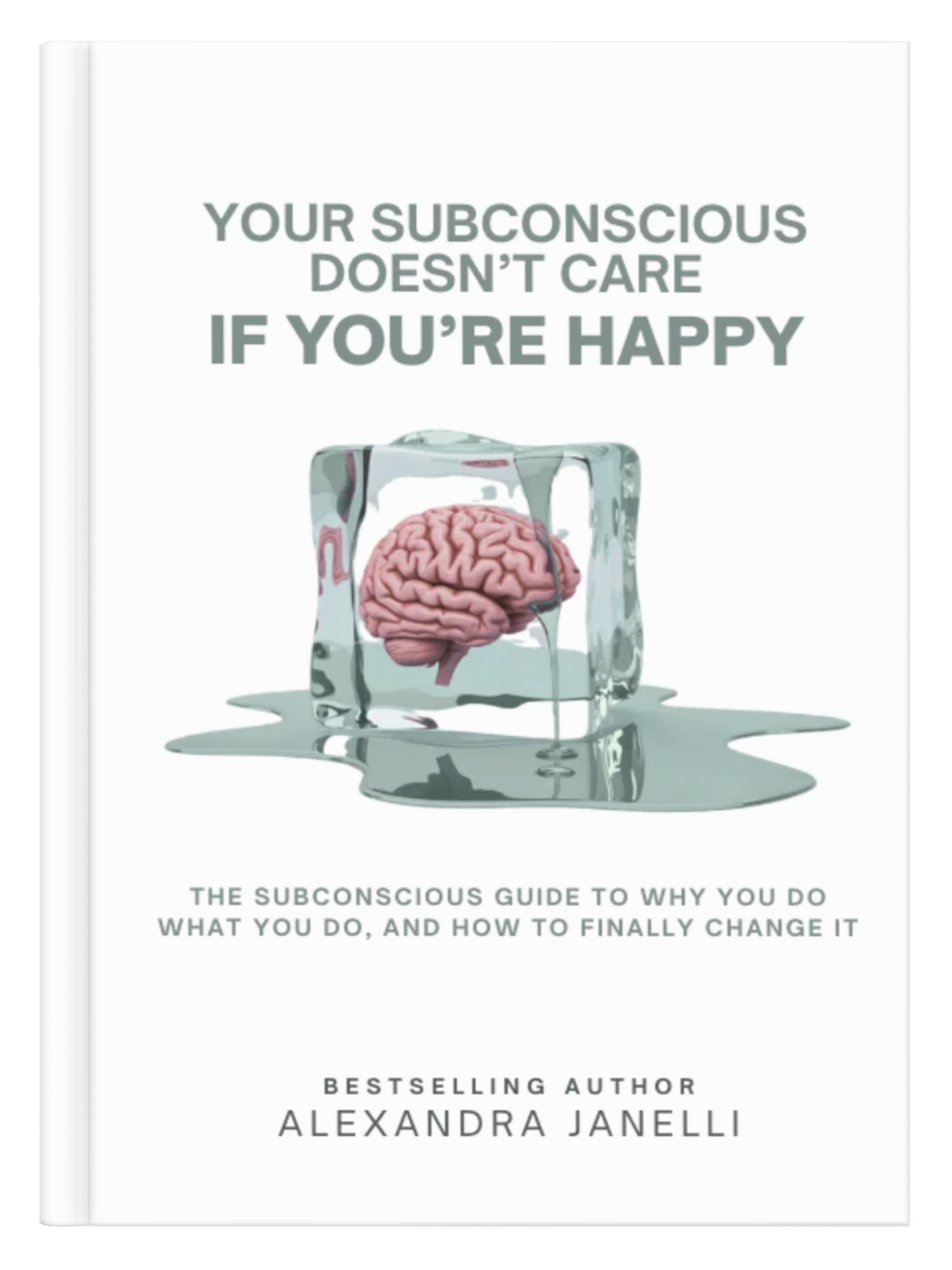
Remember, your subconscious mind doesn’t care if you are happy. It cares if you are safe.
You know you’re close to the association when the client stops explaining and starts feeling. Their voice changes. Their breathing alters. Emotion surfaces in a way that isn’t rehearsed. They aren’t telling you what happened anymore. They’re touching what it meant.
This is often accompanied by identity language that links self to behavior. “It means I’m not good enough.” “It means I’ll be rejected.” “It means I’m unsafe.” That meaning is the belief the association produced, the place where the association surfaces in words.
I had a client describing how she always shut down during disagreements with her partner. She was giving me the story calmly, almost analytically. Then I asked what happens in her body when the disagreement starts, and something shifted. Her voice got quieter. She slowed down. She said, “I just go somewhere else. I disappear.”
When I asked when she first learned to disappear, her eyes filled.
She wasn’t talking about her partner anymore. She was back in a room where being invisible was the safest thing she could be.
That’s the root association becoming visible. The link between a moment in time and a conclusion the subconscious drew from it. When you reach this layer, the behavior aligns cleanly with its origin. The client may get emotional. Not because she’s being re-traumatized. Because she’s arriving at the moment the pattern formed.
Why associations persist
There’s a reason your client knows the behavior isn’t serving her and still can’t stop. The subconscious doesn’t check for relevance. It checks for familiarity.
Associations persist because they work. They reduce perceived threat, even when the threat is no longer real. They create predictability. The system prefers what’s known, even if it’s uncomfortable, over what’s unknown. The body’s drive toward stability favors familiarity.
This is why logic alone doesn’t undo emotional learning. A client can understand intellectually that public speaking isn’t dangerous. If her body still encodes visibility as threat, the association stays active. Emotional learning has to be updated at the same level it formed, not the level the conscious mind is operating on.
You’re not trying to convince the conscious mind. You’re helping the subconscious recognize that the original conditions are no longer present. And then you are offering a replacement option based on what the client believes would be helpful. Not what you think is helpful.
That requires precision. You have to identify not just that fear exists, but what the fear predicts. What does the subconscious believe will happen if she stops doing this? What outcome is it trying to prevent? Once that belief is articulated, you can begin guiding the client toward an alternative that feels equally stabilizing.
Replacement, not removal
Most practitioners try to remove the client’s coping mechanism. The subconscious doesn’t let you take things away. It lets you replace them.
Associations don’t get removed. They get replaced as the default. The old route stays wired in. A new route gets built that the system can reach for first. If you take a coping mechanism away without a replacement, instability increases. The subconscious reverts to the old pattern because it trusts it.
The replacement has to feel safe enough to adopt. And critically, the replacement has to come from the client. Not from you. Not from what their partner wants. Not from what the culture expects. It has to be internally generated.
People use language all the time without knowing what it means to them. A client says, “I want to feel more present.” That sounds clear. But what’s present? What does that look like for this person, in her life, in her body? Until you help her define it in terms that are specific and real, the word stays abstract and the subconscious has nothing to work with.
What a client says she wants may also be shaped by social expectation rather than internal truth. She says she wants to be more outgoing because she believes that’s what she should want. Slow down and ask what she actually needs, and the answer might be quieter. To feel comfortable being herself without performing.
The real want lives underneath the expected one.
When the right replacement is named, one that’s honest and specific, the body responds differently. The system settles rather than braces. Your suggestions land because the client feels the alignment, not because she has to reason through it.
This is the work that lives in Chapter 17 of the training manual in much more detail, where coping mechanisms get their own dedicated unpacking. That’s the next chapter, and the next episode.
Where to go from here
The presenting issue is the entry point. The association underneath is where the work happens. The replacement the client builds is what makes it stick.
Understanding how an association formed is necessary. Reliving it repeatedly is not. Once the link is clear, the work shifts forward. The question becomes what would feel safe now. And that question has to be answered by the client.
This is the layer most certifications skip. Not because the work is impossibly complex. Because it can’t be scripted. Every client’s association formed differently. Every replacement has to be specific to who they actually are. Past a certain point, you have to be reading the client, not following a protocol.
Free practitioner guide. If you’re navigating the layered work of running a practice as a practitioner, a business owner, and a person all at once, the Three Hats Practitioner Guide is the free lead magnet I built for exactly that.
The training manual. Advanced Hypnosis: A Practitioner’s Guide Beyond Scripts & Techniques. 500-plus pages on what happens after the client enters the hypnotic state. Available now on Amazon. Get it here.
Mentorship. If the work in this episode is the kind of thing you want to deepen one-on-one, the mentorship program is where I take a small number of practitioners through real cases, real session reviews, and the parts of the work that don’t fit into scripts.
Series so far.
- Episode 1: The Presenting Issue Is Never the Issue
- Episode 2: The Subconscious Doesn’t Check for Relevance (this post)
- Episode 3: Coping Mechanisms as Intelligent Adaptations (coming next)