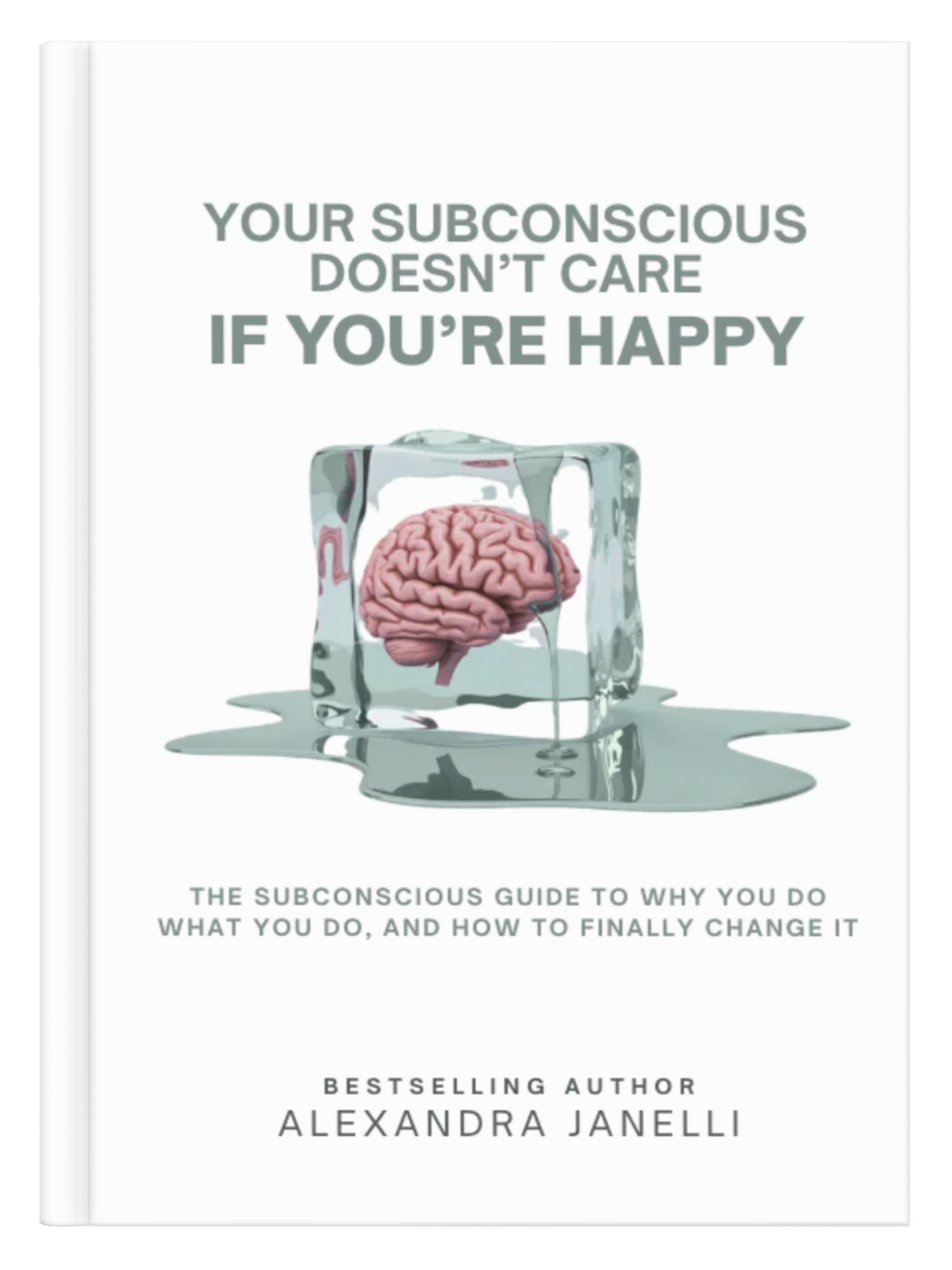
BOOK

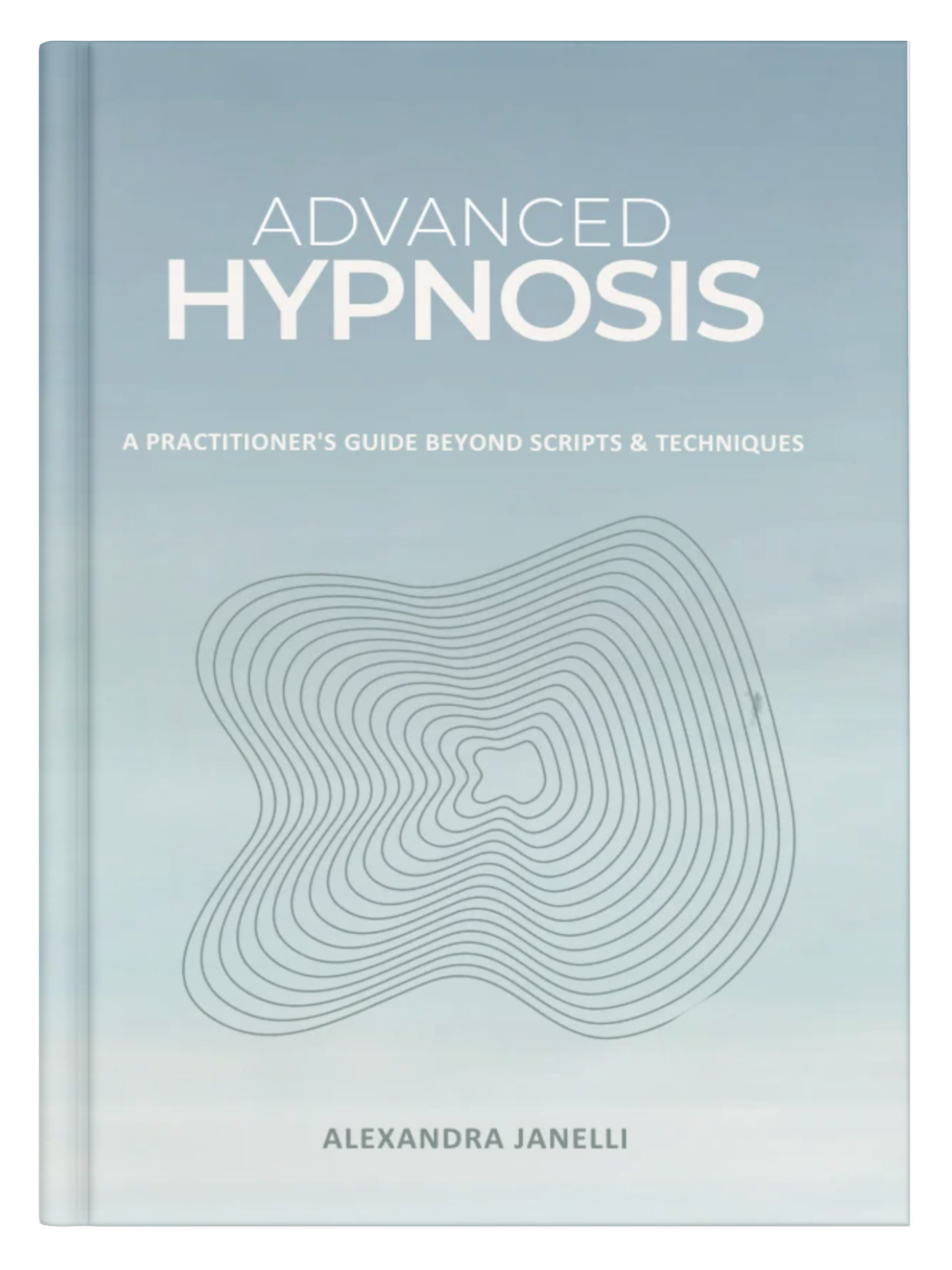
Advanced Hypnosis: A Practitioner's Guide Beyond Scripts & Techniques by Alexandra Janelli
A MUST READ MANUAL FOR PRACTITIONERS

Advanced Hypnosis: A Practitioner's Guide Beyond Scripts & Techniques

For practitioners who have completed their training and know something is still missing. This advanced training manual picks up where certifications leave off.

Buy on Amazon

Paperback $89  ·  Hardcover $129  ·  Kindle $9.99

Anyone can learn to hypnotize someone.

The hard part is what you do once they're in the hypnotic state.

Foreword by

Jim Curtis

Best-selling author of The Book of Possibility and founder of The Possibility Company.

As seen in

The New York Times Oprah Magazine Forbes Vogue The New Yorker Elle Cosmopolitan
Advanced Hypnosis open book

"This book taught me things my certifications never did. Alexandra goes beyond technique and scripts, teaching the work that truly begins once the script ends. It fills a gap so many of us feel but can't always name. This is the training manual our field has been missing."

"Alexandra's Advanced Hypnosis is a masterclass in the art of creating meaningful change for healers, taught by one of the foremost experts in the field."

Built from sixteen years of private practice, Advanced Hypnosis teaches you how to:

Better sessions. Stronger rapport. Suggestions that land.

Free Framework

Not ready to buy yet?

Chapter 44 of this advanced training manual is called "The Three Hats." The core framework is available now as a free guide for practitioners. The roles every practitioner carries, and what happens when they pull in different directions.

Get the Free Guide

Inside the Manual

45 chapters across six sections, from the foundations of the hypnotic state to the real-time decisions that define advanced practice.

What the Hypnotic State Actually Is
  • 01
    Hypnosis Is a State, Not a Performance

    Reframes what hypnosis actually is: a naturally occurring mental state, not a theatrical act. Sets the foundation for everything that follows.

  • 02
    Conscious vs. Subconscious

    Maps the two minds every practitioner works with and why understanding their relationship changes how you approach every session.

  • 03
    Hypnosis Is Already Happening

    Shows how hypnotic-like states occur throughout everyday life, and why this matters for how you introduce and explain hypnosis to clients.

  • 04
    Depth Is Not Always the Goal

    Challenges the assumption that deeper is better. What actually determines whether a session succeeds.

  • 05
    Safety Is the Gateway to the Hypnotic State

    The role of the nervous system and felt safety in allowing a client to enter and sustain the hypnotic state.

  • 06
    Induction as Responsive Guidance

    Why induction isn't a script to deliver but a conversation to lead. How to read and adjust in real time.

The Practitioner Is the Instrument
  • 07
    What a Session Actually Looks Like

    The real arc of a professional session from intake to emergence, and why it rarely follows the textbook outline.

  • 08
    Rapport Is Not a Warm-Up

    Rapport is the work, not the prelude. How genuine connection shapes every stage of the session.

  • 09
    Your Presence Sets the Session

    The practitioner's internal state and level of presence directly shape what is possible for the client.

  • 10
    What You Think Shapes What You See

    How your assumptions and expectations create invisible filters over what's actually happening in the room.

  • 11
    Staying Out of Fix-It Mode

    The compulsion to solve, redirect, or rescue, and why resisting it opens more space for real change.

  • 12
    Listening With All Available Information

    Listening beyond words. What tone, pace, breath, and body language tell you that language alone cannot.

  • 13
    When the Session Goes Off Track

    How to stay grounded and work with what's actually happening when a session departs from the plan.

  • 14
    Expertise Without Control

    Advanced practice means holding your knowledge lightly. Leading the session without dominating it.

Understanding the Person in Front of You
  • 15
    The Presenting Issue Is Never the Issue

    Why the complaint that brings a client in is rarely the root of what needs to change.

  • 16
    How Associations Form and Why They Persist

    The mechanics of subconscious associations: how they form, why they survive, and what it takes to shift them.

  • 17
    Coping Mechanisms as Intelligent Adaptations

    Reframes "resistant" behaviors as creative solutions to earlier problems, changing how you approach them.

  • 18
    Timing, Readiness, and the Nervous System

    Not every client is ready to change when they arrive. How to assess and work with readiness rather than push past it.

  • 19
    Language as a Map to the Subconscious

    What a client's specific word choices reveal about their internal experience, and how to use language as an entry point.

  • 20
    Discovering the Root Association

    The process of working backward from behavior to origin, and why this changes what you address in session.

  • 21
    Context Is Relational and Environmental

    How a client's outside life, including relationships, environment, and circumstances, lives inside the session whether or not it's mentioned.

  • 22
    Structure, Intention, and Staying on Agenda

    How to hold a clear session agenda while staying genuinely responsive to what unfolds.

Suggestion and Integration
  • 23
    What a Suggestion Actually Is

    A precise definition that separates suggestion from instruction, and why that distinction shapes everything you say.

  • 24
    The Subconscious Speaks in Personal Language

    Why generic suggestions don't land and how to build language that resonates with each specific client.

  • 25
    Building the Bridge

    How to construct suggestions that connect where the client is now to where they want to go.

  • 26
    What the Behavior Provides

    Every behavior serves a purpose. How to understand what a symptom is doing before you try to remove it.

  • 27
    The Dig Down

    Techniques for moving beneath the surface story to the underlying structure sustaining the issue.

  • 28
    Precision Over Positivity

    Why affirmative framing isn't always the answer, and how to build precision into your language instead.

  • 29
    Tracking Acceptance and Resistance

    Reading how the client is receiving your suggestions in real time, and adjusting accordingly.

  • 30
    Structure, Silence, and the Session Arc

    How pacing, pause, and silence function as active ingredients in a well-constructed session.

  • 31
    Ethical Suggestion

    The ethics of influence: what consent, autonomy, and responsible suggestion practice look like in action.

When the Room Pushes Back
  • 32
    Six Tools for Uncomfortable Moments

    A practical toolkit for the moments that catch practitioners off guard, without losing presence or authority.

  • 33
    When the Client Does Not Enter the Hypnotic State

    What to do when a client resists, cannot relax, or appears stuck at the surface.

  • 34
    When the Session Departs from the Plan

    How to work fluidly with unexpected turns, and why this is often where the real work begins.

  • 35
    When the Body Speaks

    Physical responses during session: shaking, tears, involuntary movement, and how to work with them rather than around them.

  • 36
    When the State Becomes Unpredictable

    Intense emotional releases, unexpected abreactions, and what it means to hold space through them.

  • 37
    When the Practitioner Is the Variable

    What to do when you recognize that your own state is affecting the session, and how to course-correct.

  • 38
    When Trauma Enters the Room

    How to recognize when trauma is present and what your ethical and practical responsibilities are in those moments.

Integration, Confidence, and Sustainable Change
  • 39
    How the Work Unfolds After the Session

    Change doesn't happen in the chair. What the post-session window is and why practitioners need to understand it.

  • 40
    The Post-Emergence Debrief

    How to close a session cleanly: what to say, what not to, and how to set the client up for integration.

  • 41
    Post-Session Integration

    What clients need between sessions to consolidate change, and how to prepare them for it.

  • 42
    Between-Session Support That Actually Helps

    Practical support structures that reinforce progress without creating dependency.

  • 43
    Knowing When the Work Is Complete

    How to recognize the natural endpoint of a client relationship and how to close it well.

  • 44
    The Three Hats

    The three roles every practitioner carries: practitioner, business owner, and person. What happens when they conflict.

  • 45
    Practicing Hypnosis as a Craft

    A closing framework for treating hypnosis not as a certification but as a lifelong practice of refinement.

Get in Touch

Have a question or want to connect? Send me a message and I'll get back to you soon.